
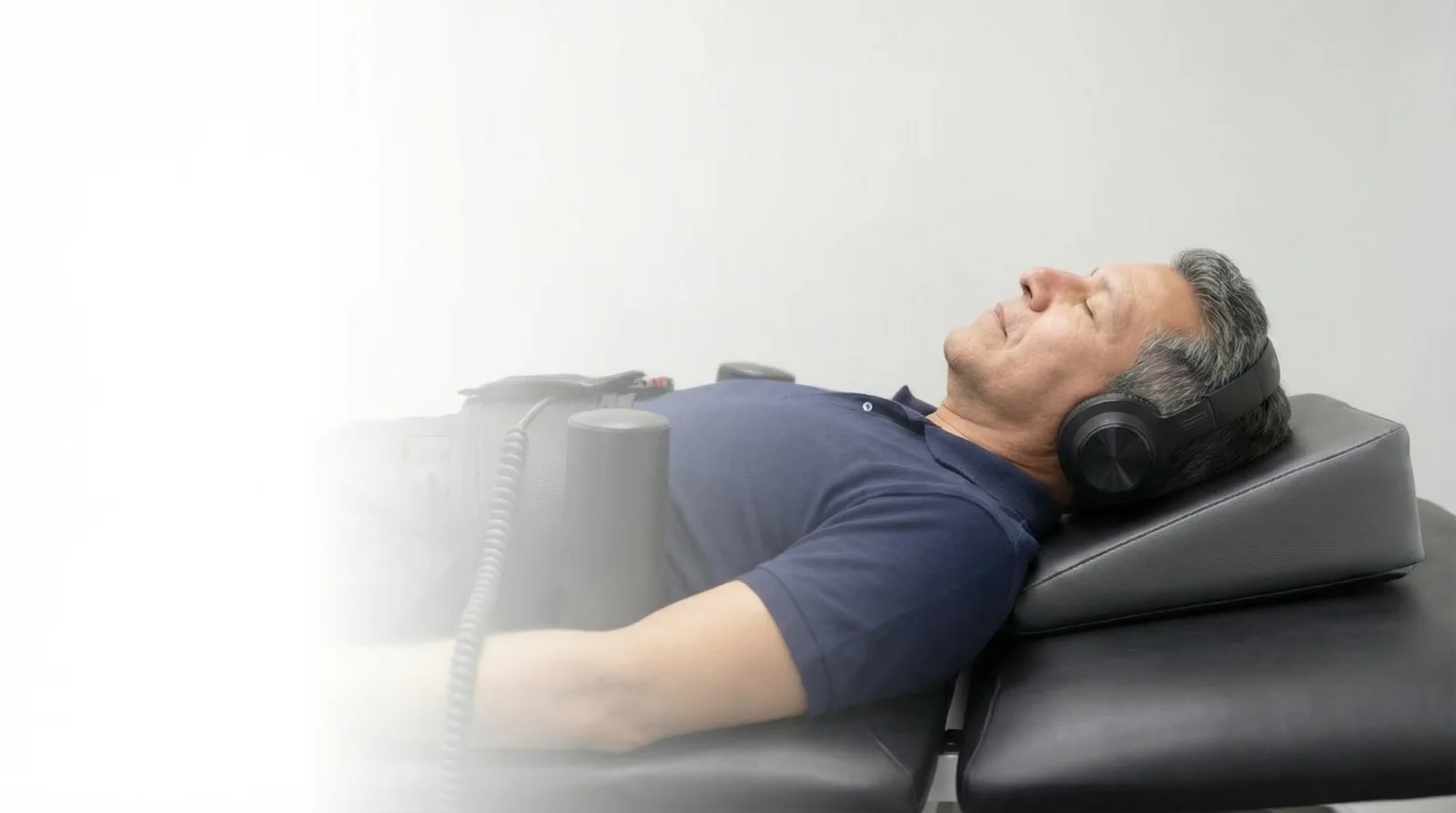
THE MECHANICS
How Spinal Decompression Works
If you've ever balled up your fists and pressed them into your lower back just to feel a moment of relief — you already understand the problem. Your body is telling you the disc needs the weight taken off. The issue is, you can't keep your fists there all day, and simple stretching won't get deep enough to make a lasting difference.
Spinal decompression is the only conservative treatment that directly reduces the mechanical load on a damaged disc — creating conditions where your body can actually begin to heal. Not by masking pain. Not by strengthening around the problem. By removing the compression that's been stalling your recovery.
Here's what's actually happening inside your spine — and why this is different from everything else you've tried.
SPINAL DECOMPRESSION
How Spinal Decompression Works
If you've ever balled up your fists and pressed them into your lower back just to feel a moment of relief — you already understand the problem. Your body is telling you the disc needs the weight taken off. The issue is, you can't keep your fists there all day, and simple stretching won't get deep enough to make a lasting difference.
Your body knows the disc needs the weight taken off. Spinal decompression is the only conservative treatment that directly reduces that load — creating conditions where healing can begin.
Here's what's actually happening inside your spine — and why this is different from everything else you've tried.
The Modern Lifestyle and the Compression Cycle
Your spine supports your body weight all day, every day. When you sit, stand, walk, or lift, your discs are under constant compressive load.
For a healthy disc, this isn't a problem—discs are designed to handle compression. But when a disc is injured, bulging, degenerating, or herniated, this constant pressure creates a cycle that prevents recovery.
"Every form of spine rehabilitation works under compressive load — except one. That distinction changes everything."
Understanding Spinal Decompression Means Understanding Your Spine
To understand how spinal decompression works, you first need to understand what's happening inside a damaged disc.
Your intervertebral discs sit between each vertebra, acting as shock absorbers. They have a tough outer ring and a gel-like center. When that outer ring weakens or tears, the inner material can bulge or herniate outward—pressing on nerves and causing pain.
The Problem: Constant Load
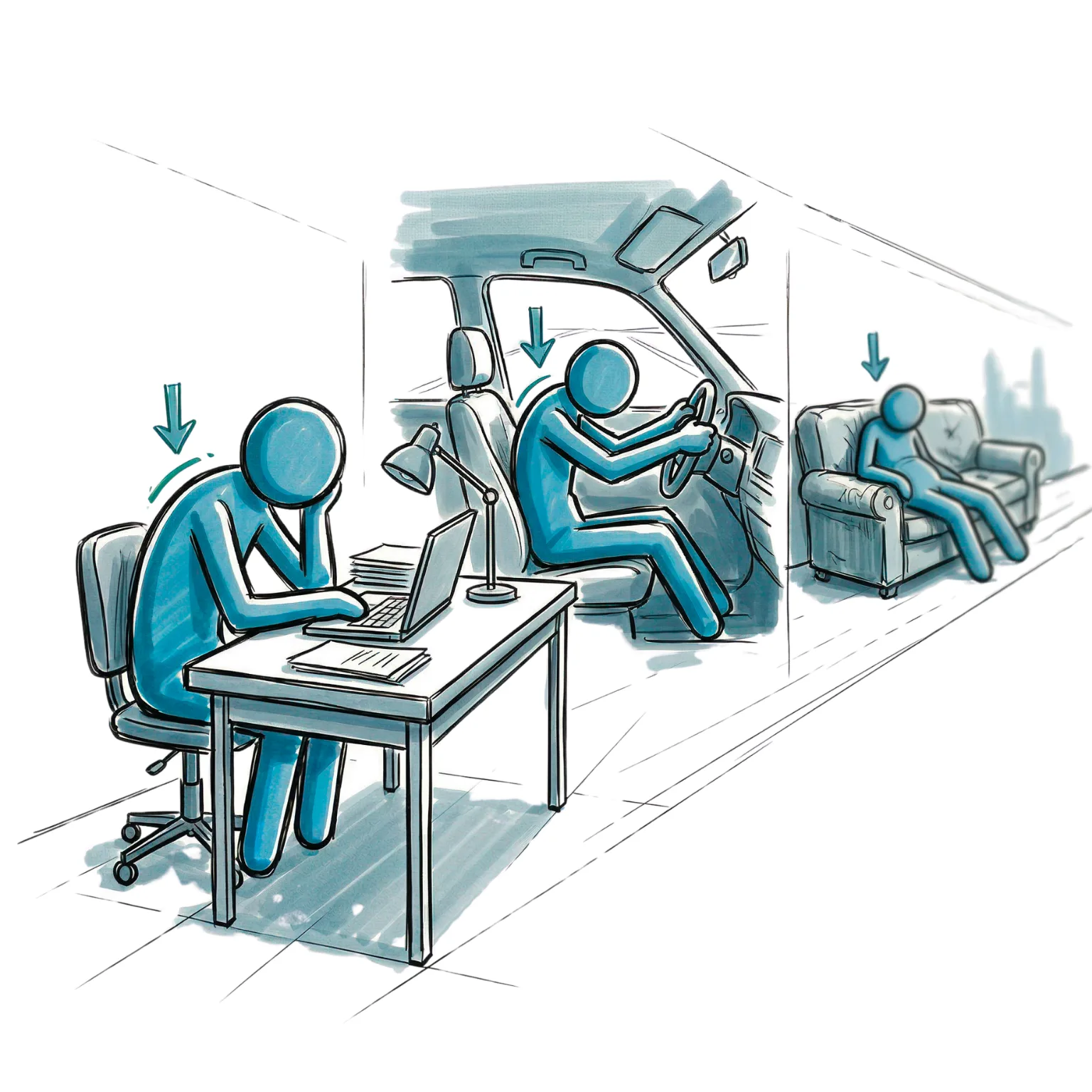
When a disc is damaged, it needs reduced pressure to heal. But daily life keeps loading it—sitting, standing, moving. The disc never gets relief, and the cycle continues.
What your disc handles every day
Sitting, slouched forward
Upright standingbaseline
Lifting 20 kg, bent back
Source: Nachemson 1966
What your disc handles every day
Lifting 20 kg, bent back
Gray tick = upright standing (≈0.50 MPa)
Source: Nachemson 1966
Why Simple Stretching Doesn't Work
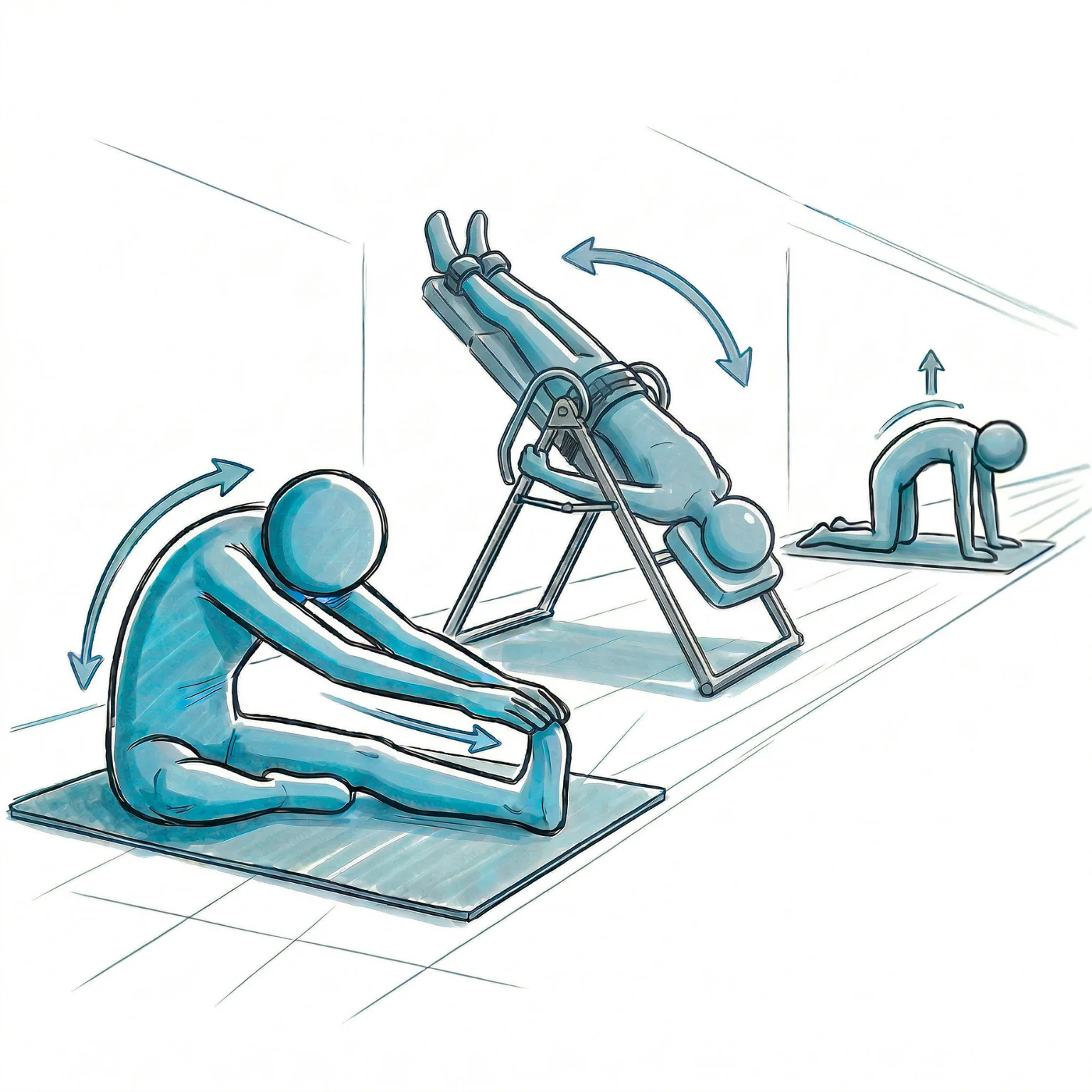
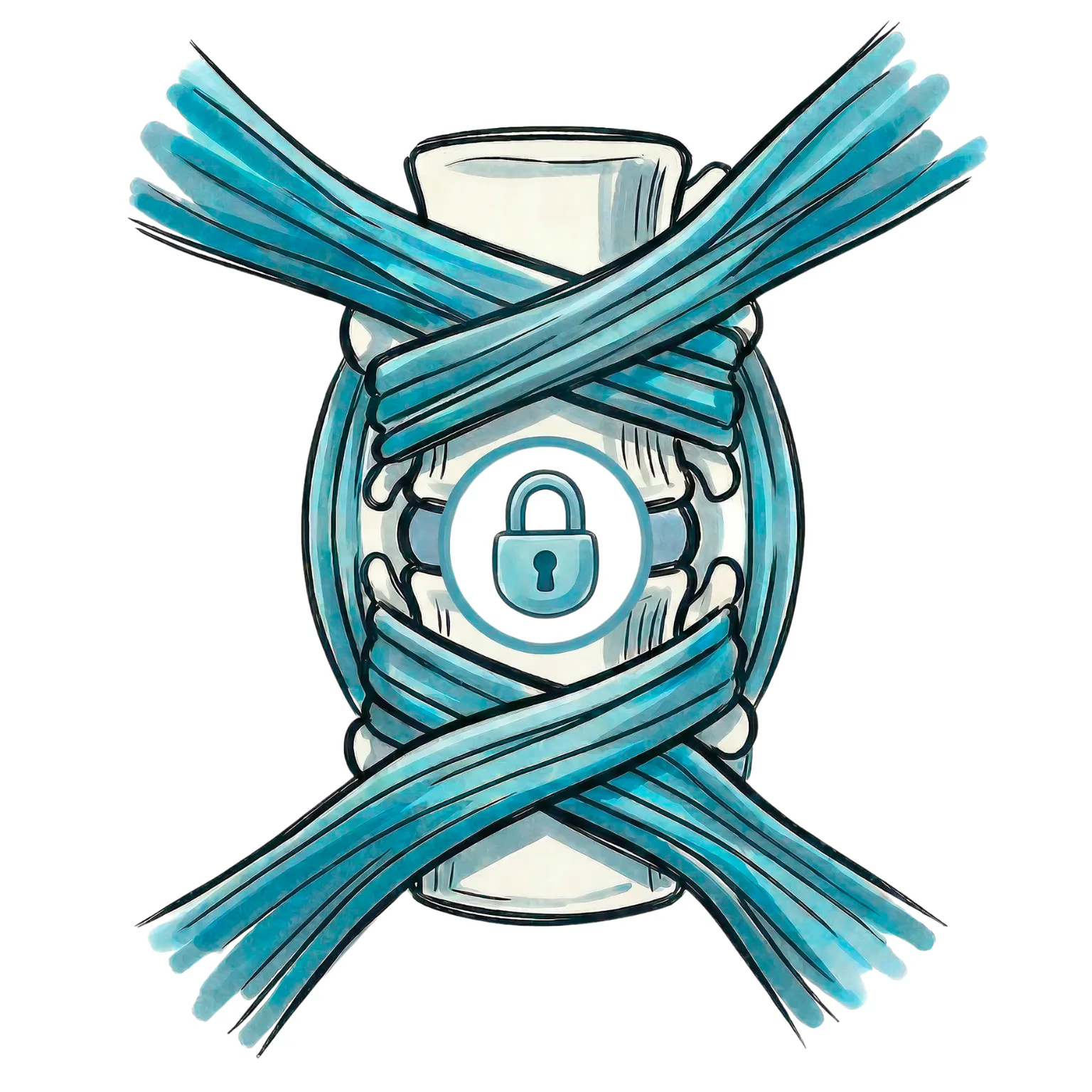
When you try to stretch or decompress your spine—hanging from a bar, using an inversion table, or basic traction—your body fights back. Muscles along your spine reflexively tighten to protect you. This "guarding" response actually increases pressure rather than relieving it.
Traction can make it worse
Upright standingbaseline
Conventional horizontal traction
Source: Nachemson 1966; Anderson et al. 1983
Traction can make it worse
Conventional horizontal traction
Gray tick = upright standing (≈0.50 MPa)
Source: Anderson et al. 1983
Computer-Controlled Decompression Bypasses the Guard
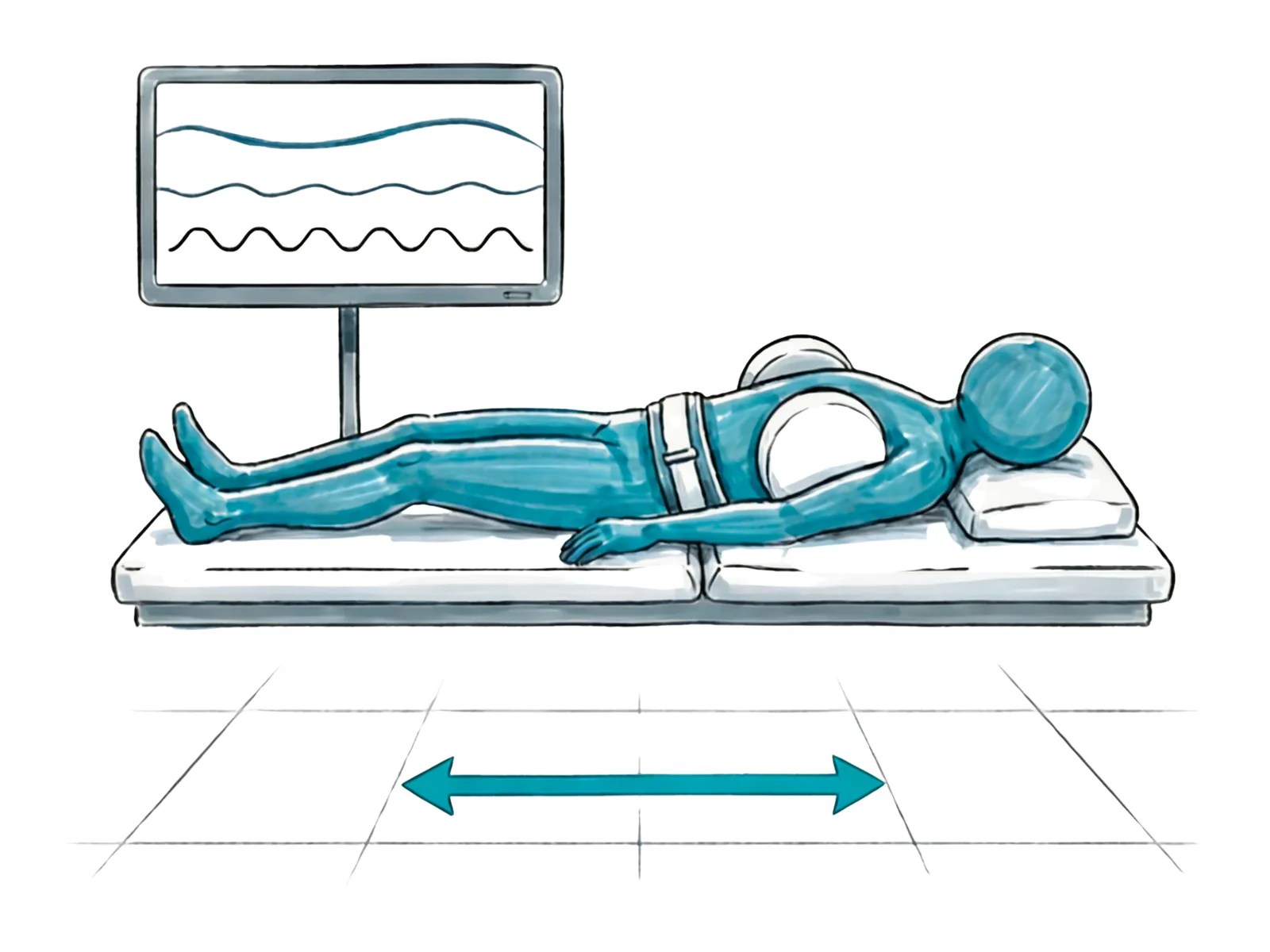
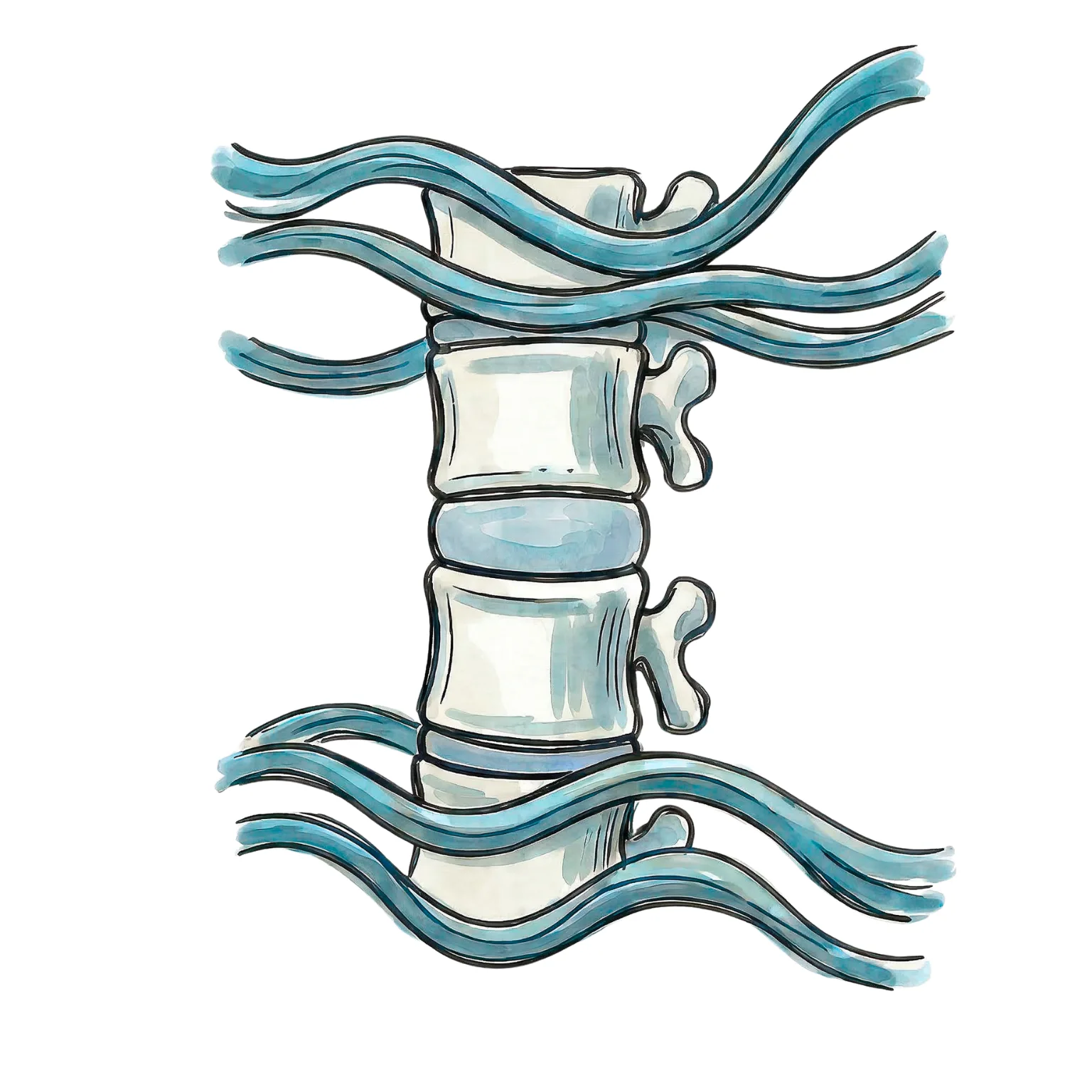
Research-grade decompression systems use precise, computer-controlled protocols designed to work around this reflex. By using specific force curves and real-time adjustments, the system safely extends the spine without triggering the guarding response.
The only treatment that goes negative
Upright standingbaseline
Conventional horizontal traction
Computerized spinal decompression
Source: Nachemson 1966; Anderson et al. 1983; Ramos & Martin 1994
The only treatment that goes negative
Computerized spinal decompression
Gray tick = upright standing (≈0.50 MPa)
Source: Ramos & Martin 1994
Recovery Without Load
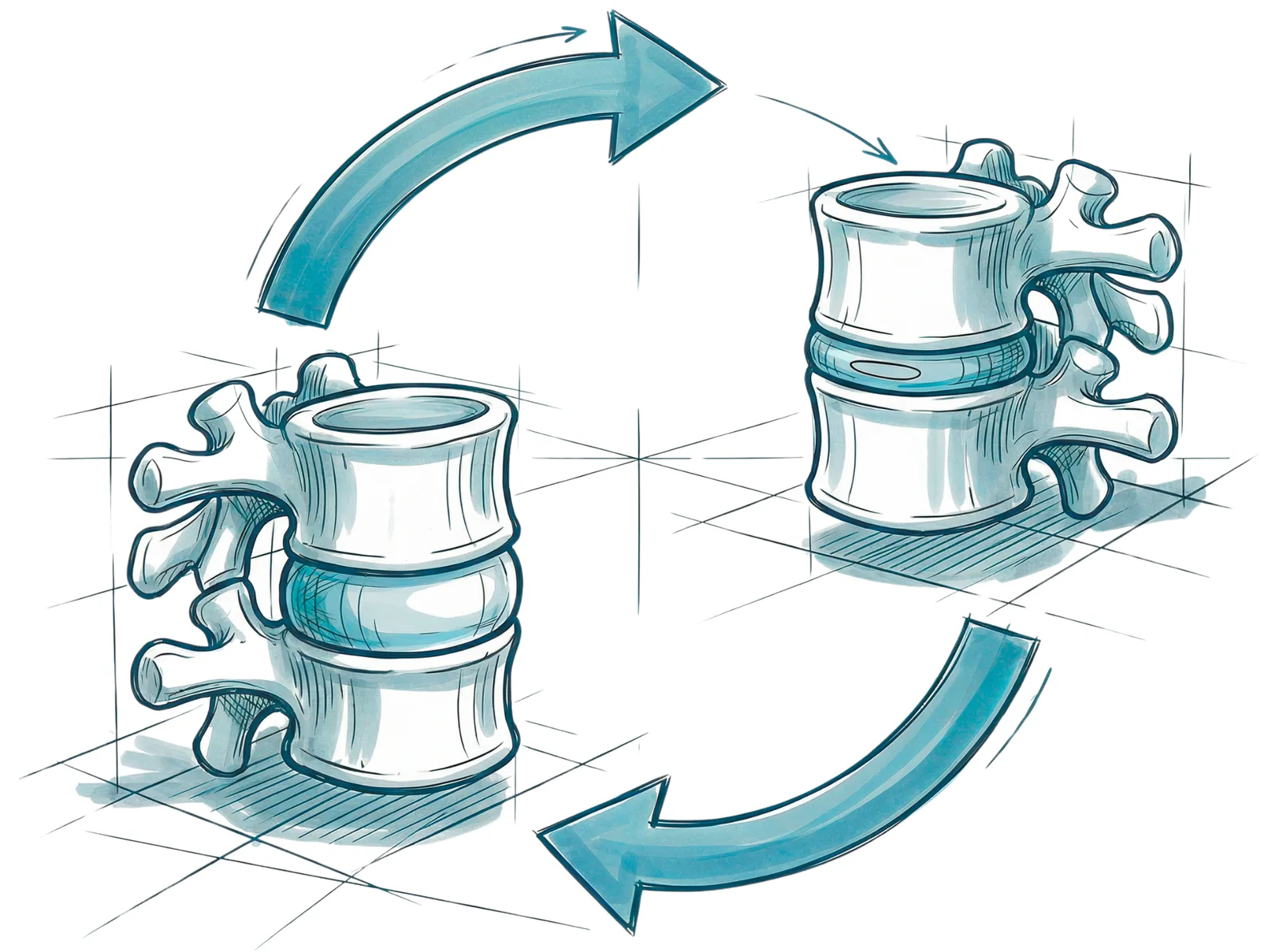
With the guarding response bypassed, pressure at the targeted disc drops below atmospheric levels — and for the first time, your disc is in an environment where it's not being compressed.
This is where recovery begins. Your discs don't have a direct blood supply — they rely on the vertebral bones above and below for everything they need. The cyclical unloading of decompression creates a pumping effect through the cartilage endplates, drawing moisture back into the disc and restoring lost hydration. While the nutrients your disc cells need must naturally diffuse through those endplates, removing constant mechanical stress creates the ideal environment for your body's own repair processes to work.
Over a structured course of treatment, each session reinforces this cycle — unload, rehydrate, recover. It's spine-specific rehabilitation: the only approach where your disc can heal without bearing weight.
Why "Spine-Specific Rehabilitation" Isn't Just a Label
We use the term "spine-specific rehabilitation" throughout this site for a specific reason. Other forms of conservative spine care work on the spine while it's still under compressive load. Those therapies have real value. But none of them change the fundamental mechanical environment the disc is trying to heal in.
Spinal decompression is the only modality that removes the load entirely — taking intradiscal pressure below zero. That's what makes it spine-specific. It addresses the disc on terms no other therapy can.
"You can debate what negative pressure does inside the disc. What you can't debate is that it's the only treatment that achieves it."
Think of it this way: if you fractured a bone and the doctor said "we need to take the weight off so it can heal," you wouldn't question the logic. You'd use a cast, crutches, or a brace. The same principle applies to your disc:
- A damaged disc under constant compression is a disc that can't recover — just like a fracture under constant load
- Every other therapy asks the disc to heal while it's still bearing weight
- Decompression is the only treatment that takes the weight off — measured at -0.10 MPa, below atmospheric pressure
- That's not a theory. It's a peer-reviewed measurement. The rest is your body doing what it does when you give it the right conditions.
The therapy doesn't heal your disc directly. It creates the only environment where your disc isn't being crushed — so your body's own repair processes can actually work.
Providers disagree on the exact mechanism — whether decompression mechanically retracts disc material or creates conditions for natural reabsorption. What they agree on is that the clinical outcomes are favorable when proper protocol is followed.
Learn more about the progressive treatment process → →Why This Differs From Traction
Traditional traction applies steady pulling force. Your muscles detect this and guard against it—limiting any actual decompression. Computer-controlled decompression is different:
- Logarithmic force curves that work around muscle guarding
- Real-time biofeedback that adjusts to your body's response
- Precise, repeatable protocols based on clinical research
- Patient-specific parameters tailored to your condition
The Measurable Difference: Traction vs. Decompression
Intradiscal pressure measurements show why these are fundamentally different treatments. Conventional traction can increase disc pressure due to muscle guarding. In the only published in vivo study, motorized decompression was observed to reduce pressure below zero (Ramos & Martin, 1994).
Traction & inversion
Sources
Nachemson A (1966). The load on lumbar disks in different positions of the body. Clin Orthop Relat Res 45:107–122.
Wilke HJ et al. (1999). New in vivo measurements of pressures in the intervertebral disc in daily life. Spine 24(8):755–762.
Ramos G, Martin W (1994). Effects of vertebral axial decompression on intradiscal pressure. J Neurosurg 81:350–353.
Anderson GB et al. (1983). Intradiscal pressure during traction. Spine 8(2):146–154.
"The difference isn't marketing — it's physics. Every other approach rehabilitates under load. This is the only one that removes the load entirely. That's not a claim. It's a measurement."
"While chiropractors, physical therapists, NPs, and PAs don't always agree, those who have used this therapy with proper equipment and protocols agree on its effectiveness—especially given its favorable risk-to-reward profile compared to irreversible alternatives."

Robert Odell, MD, PhD
Pain Management Specialist | Medical Advisory Board
Common Questions About How It Works
What kind of equipment is used?
Not all decompression tables are equal. Here's what separates research-grade systems from generic devices.
Learn More
Is spinal decompression safe?
Understanding the safety profile and who should (and shouldn't) consider this therapy.
Learn More
How many sessions does it take?
What to expect from a typical treatment course and why multiple sessions matter.
Learn More

Find a Preferred Provider
Enter your zip code to see if a credentialed provider is available near you.
Why choose a preferred provider?Ready to Learn More?
Find out if spinal decompression is right for your situation. Our assessment matches your specific symptoms and history to help determine if you're a good candidate.
Take the AssessmentLet's get started
We've got your info!
Thanks — we'll be in touch shortly.