
INSIGHT
Spinal Decompression Facts
Patients hear everything from miracle claims to outright dismissals. This page separates what the evidence actually supports from the noise.
Make an informed decision based on facts, not hype.
INSIGHT
Spinal Decompression Facts
Spinal decompression is one of the most discussed—and most misunderstood—non-surgical spine therapies. This page clarifies what it is, what the science supports, and why results vary.
Make an informed decision based on facts, not hype.
Spinal Decompression at a Glance
The infographic below summarizes how spinal decompression works, who it may help, and what factors influence outcomes.

Most Asked Questions About Spinal Decompression
Is this just traction?
No. Traditional traction applies steady pulling force, which triggers your muscles to guard and resist—limiting actual decompression. Computer-controlled decompression uses logarithmic force curves and real-time biofeedback to work around this guarding response, allowing for true spinal unloading.
See the full comparison →Is spinal decompression the same as an inversion table?
No. Inversion tables flip you upside down to use gravity, which triggers the same muscle guarding response as traction. You're also unable to target specific spinal levels. Clinical decompression is precise, controlled, and targets the affected disc directly.
See the full comparison →Why didn't it work when I tried it before?
Several factors affect outcomes: equipment quality varies dramatically, some patients weren't good candidates, some didn't complete a full treatment course, and some had conditions that don't respond to decompression. The clinical studies that report favorable outcomes used research-grade systems with real-time biofeedback and computer-controlled cyclical loading — the same tier of equipment required for preferred provider status on this platform. This is why proper evaluation and vetted providers matter.
Learn about our provider standards →Does it actually help discs?
Studies have documented measurable changes on post-treatment imaging, including reduction in disc bulging and herniation size. However, results vary by individual, and structural change doesn't always correlate perfectly with symptom improvement. The therapy creates conditions that support recovery—it doesn't guarantee structural correction.
See the clinical evidence →How long does it take to know if it's helping?
Most patients begin noticing changes within the first few weeks, though significant improvement typically develops over the full course of treatment (usually 20-30 sessions over several weeks, depending on severity and response). Some patients experience early aggravation before improvement—this is normal and usually resolves.
Full treatment timeline →Is spinal decompression FDA approved?
Spinal decompression equipment is FDA-cleared (not "approved"—an important distinction). FDA clearance means the device has been reviewed for safety and effectiveness for its intended use.
Learn about equipment standards →How many sessions will I need?
Treatment protocols typically range from 20 to 30 sessions, depending on condition severity and individual response. Some cases may require additional sessions depending on complexity. Your provider will recommend a plan based on your specific situation.
How long does treatment take? →Is spinal decompression painful?
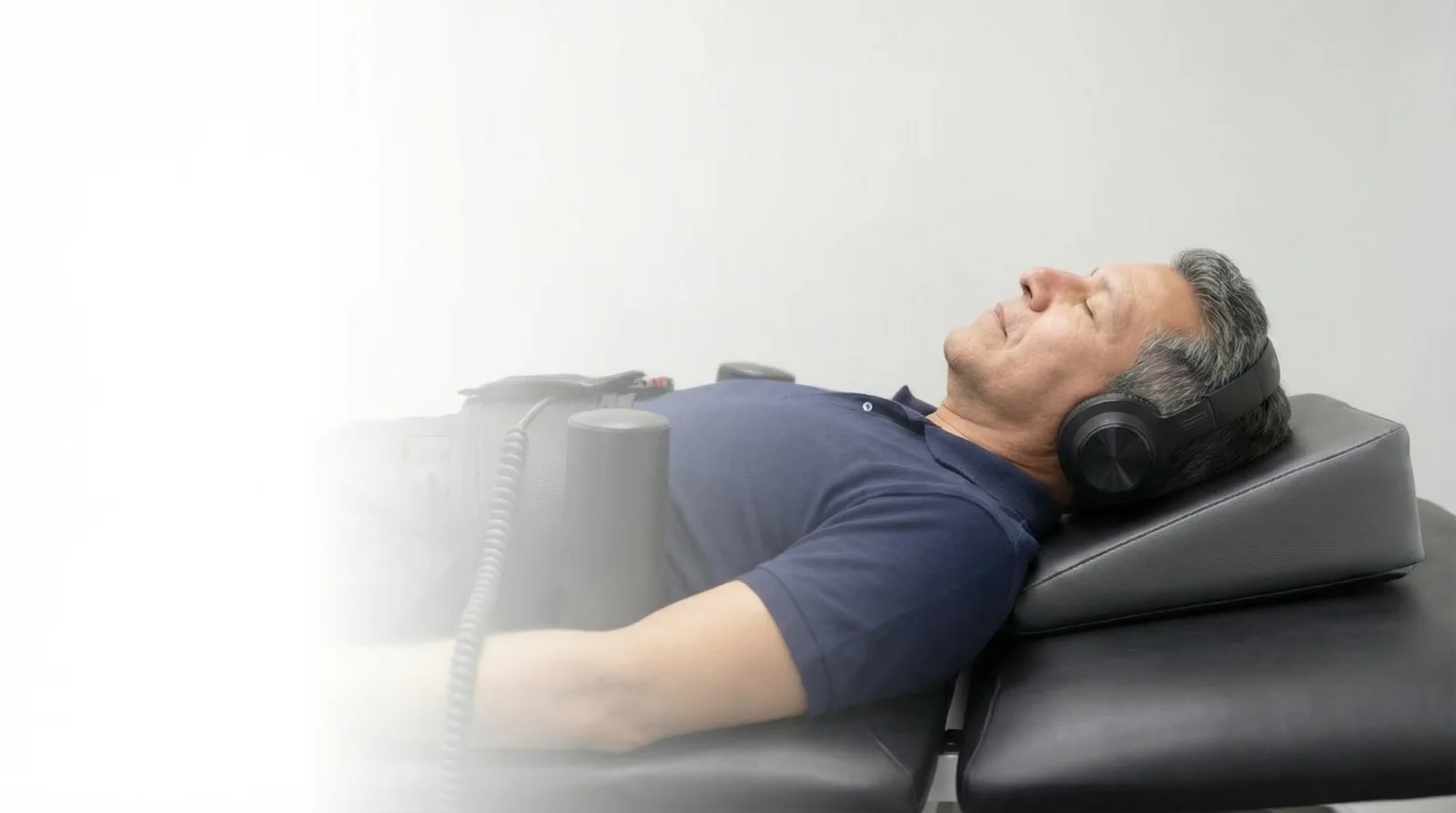
Most patients find treatment comfortable—many fall asleep during sessions. Some experience mild soreness afterward, similar to the muscle fatigue you might feel after a good workout. Significant pain during treatment is not normal and should be reported to your provider.
What to expect during treatment →Is spinal decompression covered by insurance?
Most insurance plans classify spinal decompression as "investigational" and don't cover it. This reflects insurance categorization, not clinical validity. Many effective treatments aren't covered, and coverage status doesn't determine whether something works.
Insurance & payment details →Is spinal decompression safe?
When properly administered to appropriate candidates, spinal decompression has an excellent safety profile. It's non-invasive with no injections or incisions. Serious adverse events are rare. The key is proper patient screening and qualified providers.
Full safety profile →What conditions does spinal decompression treat?
Spinal decompression is primarily used for disc-related conditions: herniated discs, bulging discs, degenerative disc disease, sciatica (when caused by disc compression), and some cases of spinal stenosis. It's not appropriate for fractures, tumors, severe osteoporosis, or certain post-surgical situations.
Browse all conditions →How is this different from chiropractic adjustments?
Chiropractic adjustments address joint mobility and spinal alignment. Spinal decompression addresses disc-level compression through sustained mechanical unloading. They target different aspects of spinal health and are often used together.
See the full comparison →Can spinal decompression make my condition worse?
There's no documented evidence that properly administered decompression worsens underlying conditions in appropriate candidates. Some patients experience temporary symptom aggravation early in treatment, which typically resolves as treatment progresses. This is different from actual worsening.
Is spinal decompression safe? →What if I've already had back surgery?
It depends on the type of surgery. Some post-surgical patients are candidates; others aren't. Hardware at the treatment level is typically a contraindication. This requires individual evaluation—your imaging and surgical history will determine candidacy.
Post-surgical pain & decompression →How do I know if I'm a good candidate?
Good candidates typically have disc-related pathology confirmed on imaging, symptoms that correlate with those findings, and have tried other conservative treatments without adequate relief. The only way to know for certain is a proper evaluation with a qualified provider.
Who is a candidate? →Related Pages
Ready to Find Out If You're a Candidate?
Take our quick 3-minute assessment to see if spinal decompression may be appropriate for your situation. It's free, confidential, and takes just a few questions.
Take the AssessmentGet Started
We've got your info!
We don't have a preferred provider in your area just yet, but we'll reach out as soon as one becomes available.


Find a Preferred Provider
Enter your zip code to see if a credentialed provider is available near you.
Why choose a preferred provider?