
Spinal Decompression vs. Chiropractic Adjustments
Many people assume decompression is just another form of chiropractic care. It isn't — it's spine-specific rehabilitation. Here's why the distinction matters, even though some chiropractors offer both.
The Short Answer
They're Different Interventions — Even When Offered by the Same Provider
Chiropractic adjustments involve manual manipulation of spinal joints — typically quick, targeted thrusts designed to restore joint mobility and reduce nerve interference. The philosophy behind adjustments is rooted in the relationship between spinal alignment and nervous system function.
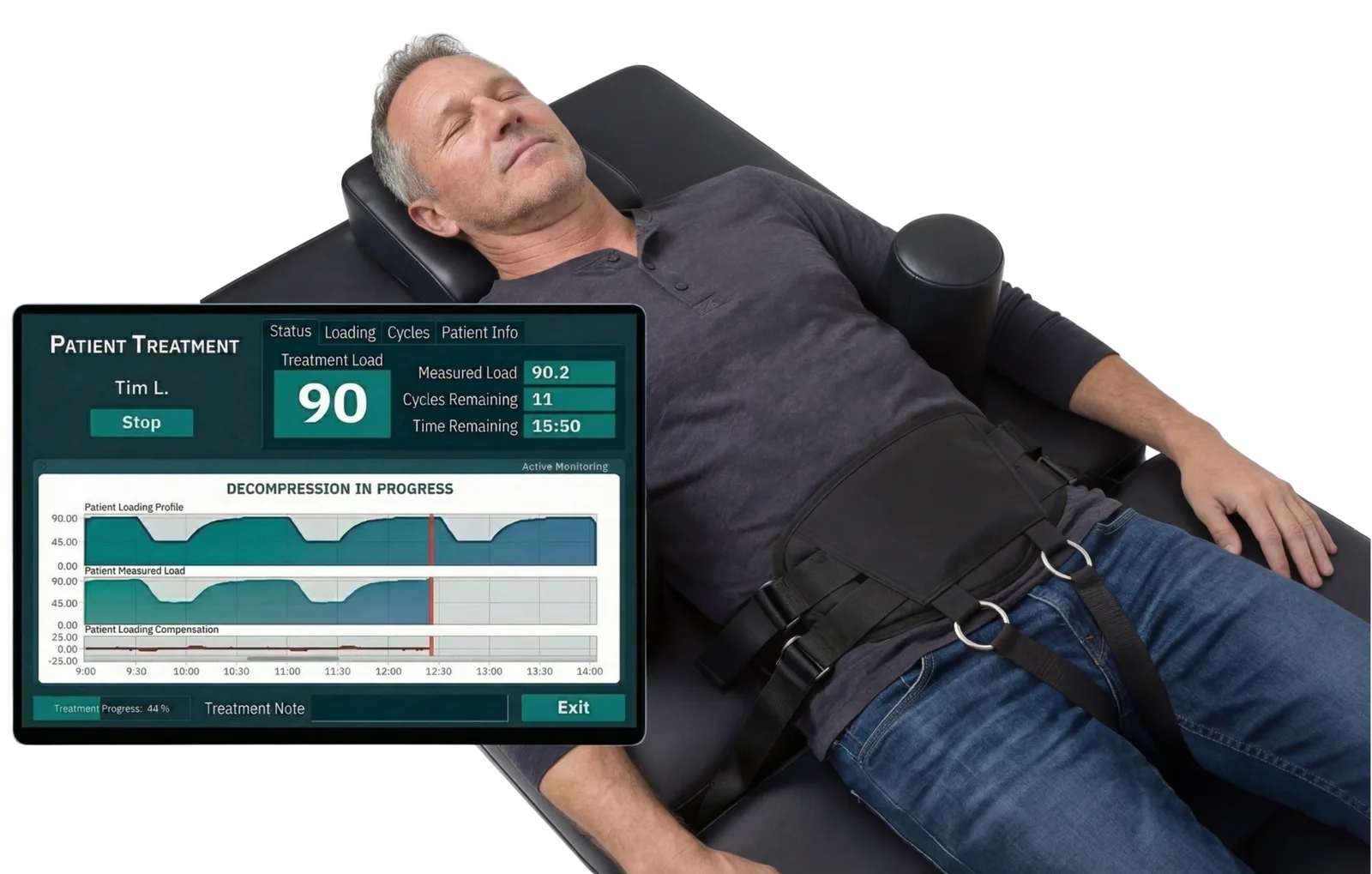
Spinal decompression — more accurately described as spine-specific rehabilitation — is a mechanical intervention that uses computer-controlled, cyclical loading to target a specific disc segment. It doesn't involve manipulation, thrusting, or manual force. It's not based on subluxation theory or alignment philosophy.
The confusion exists because many chiropractors offer decompression in their practices. But the therapy itself is used across multiple disciplines — medical doctors, osteopaths, nurse practitioners, and physical therapists all deliver it. The equipment and protocol are the same regardless of who operates them.
Why the Distinction Matters
Credibility Across Disciplines
When patients hear "decompression" and assume it's chiropractic, it creates a credibility problem. Patients who are skeptical of chiropractic philosophy may dismiss decompression without ever understanding what it actually is. Physicians who wouldn't refer to a chiropractor for adjustments may not realize that decompression is a mechanical protocol they'd find clinically reasonable.
This platform intentionally separates spinal decompression from any single discipline's identity. The therapy is defined by what it does mechanically — controlled cyclical loading of a targeted spinal segment — not by who delivers it or what philosophical framework they practice within.
A medical doctor delivering decompression uses the same equipment, the same protocols, and achieves the same mechanical effect as a chiropractor delivering decompression. The therapy is discipline-neutral. The results depend on equipment quality, protocol adherence, and patient selection — not on the provider's license type.
"If this is offered at a chiropractic office, isn't it just chiropractic?"
A hospital offers both physical therapy and surgery. That doesn't make surgery "just physical therapy." The setting doesn't define the intervention. Decompression is a specific mechanical protocol that happens to be offered across multiple clinical disciplines — including chiropractic offices, medical clinics, and multidisciplinary spine centers.
Mechanically
What Each Actually Does to Your Spine
A chiropractic adjustment applies a quick manual thrust to a spinal joint to restore mobility. The effect is primarily on the joint itself — the facet joints, the surrounding muscles, and the neurological response to the manipulation. It's a brief, acute intervention.
Spinal decompression applies controlled, cyclical mechanical loading to a specific disc segment over 30–45 minute sessions. The effect targets the disc environment — reducing intradiscal pressure and mechanical compression on nerve structures through a mechanism designed to bypass muscle guarding. See how the full mechanism works →
One addresses joint mobility. The other addresses the disc environment. They're mechanically different interventions targeting different structures for different purposes.
Feature Comparison
Side by Side
| Feature | Chiropractic Adjustments | Spinal Decompression |
|---|---|---|
| Mechanism | Manual thrust to spinal joints — quick, acute intervention targeting joint mobility | Computer-controlled cyclical loading — sustained, structured protocol targeting disc environment |
| Primary target | Facet joints, spinal alignment, neurological response to manipulation | Specific disc segment — intradiscal environment, nerve compression, fluid exchange |
| Force type | Manual — applied by hand, based on practitioner skill and assessment | Mechanical — computer-controlled with real-time biofeedback and continuous adjustment |
| Session duration | Minutes — individual adjustments are brief | 30–45 minutes — each session is a sustained, cyclical protocol |
| Loading pattern | Single thrust — acute force application | Cyclical — pull, partial release, pull, partial release throughout entire session |
| Philosophical basis | Rooted in chiropractic philosophy — subluxation theory, spinal alignment, nervous system interference | Discipline-neutral — mechanical intervention used by MDs, DOs, DCs, NPs, and PTs based on biomechanical principles |
| Best suited for | Joint stiffness, restricted mobility, general spinal maintenance, acute joint-related pain | Identified disc-level problems — herniation, bulging, degenerative changes at specific levels |
Together or Separate
Can They Be Used Together?
Yes — and many providers do combine them. When a patient has both joint-related stiffness and a disc-level problem, adjustments may address the joint component while decompression targets the disc. They're not mutually exclusive.
The important thing is understanding that they're different interventions doing different things. If someone tells you decompression "is basically just chiropractic," they either don't understand the mechanics or they're conflating the discipline with the therapy.
Your decision should be based on what your specific condition requires — not on which discipline a provider belongs to.
This is not an argument against chiropractic care
Chiropractic adjustments provide meaningful relief for many patients with joint-related spinal issues. Many excellent decompression providers hold chiropractic licenses. This comparison exists to clarify that decompression is a distinct mechanical intervention — not a subset of chiropractic philosophy — so patients can evaluate it on its own merits regardless of their feelings about chiropractic care.
Different Intervention. Different Target. Different Mechanism.
Spine-specific rehabilitation is defined by what it does mechanically — not by who delivers it. Evaluate the therapy on its merits, not on assumptions about the discipline.


Find a Preferred Provider
Enter your zip code to see if a credentialed provider is available near you.
Why choose a preferred provider?Ready to Find Out If You're a Candidate?
Take our quick 3-minute assessment to see if spinal decompression may be appropriate for your situation. It's free, confidential, and takes just a few questions.
Take the AssessmentGet Started
We've got your info!
We don't have a preferred provider in your area just yet, but we'll reach out as soon as one becomes available.