
Facet Syndrome and Spinal Decompression
Facet syndrome is a joint condition — not a disc condition. That distinction matters because spinal decompression primarily targets disc-related mechanics. Here's what that means for you.
 Spinal decompression has limited direct relevance for facet syndrome. This page exists to be honest about that — and to explain when there may be an exception.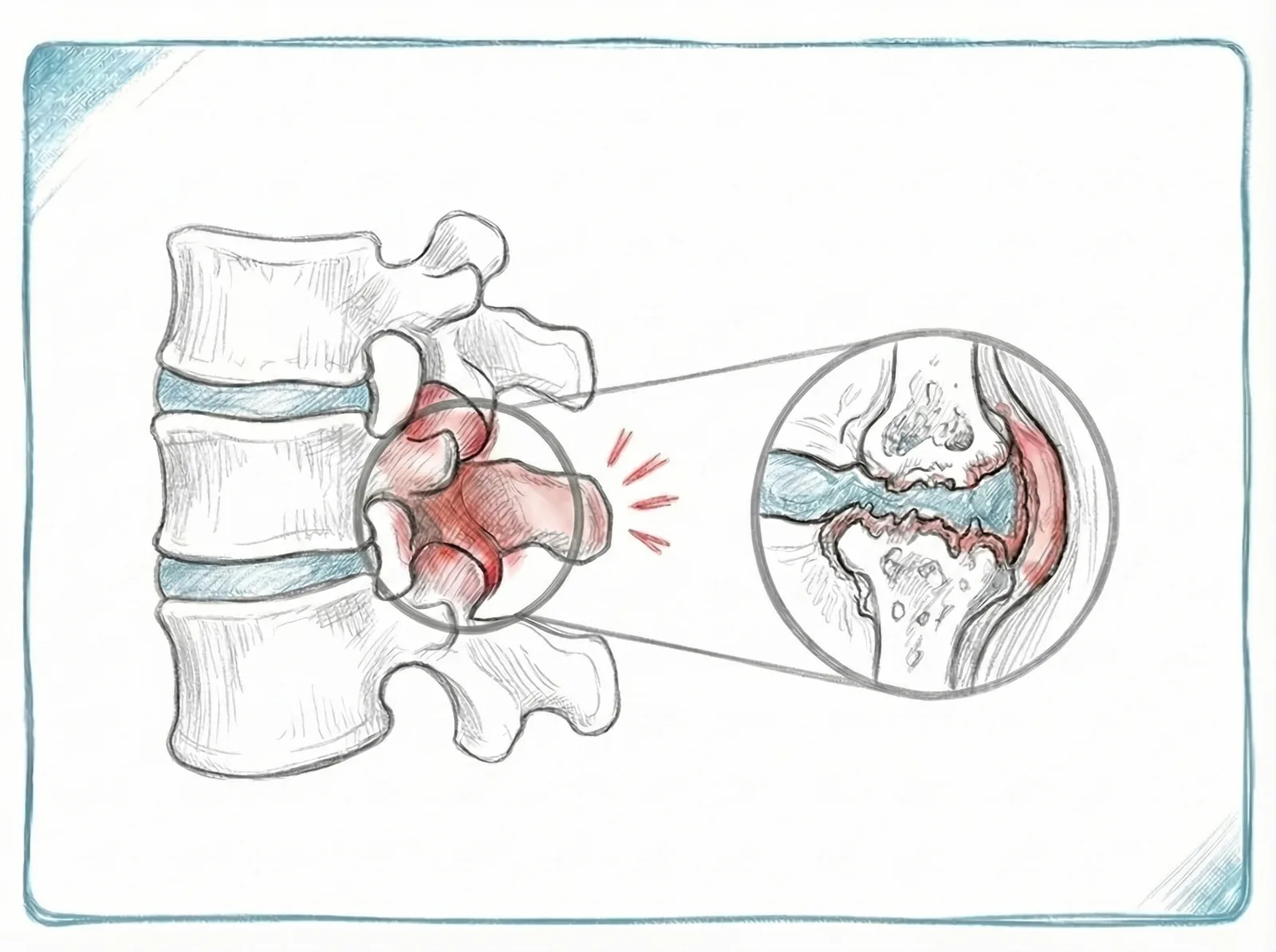
Understanding Your Condition
What Is Facet Syndrome?
Facet syndrome refers to pain originating from the facet joints — small paired joints at the back of each vertebra that guide spinal motion. When these joints become inflamed, arthritic, or irritated, they can produce localized back or neck pain, stiffness, and sometimes referred pain into the buttocks or shoulders.
The key distinction: facet joints are not disc structures. They are synovial joints — more similar to a knee or finger joint than to an intervertebral disc. This is why spinal decompression, which targets disc-level mechanics, has limited direct application.
Why We're Being Direct
Why This Page Exists
Many patients with facet syndrome search for spinal decompression because they've heard it helps “back pain” or “spinal conditions.” Some clinics market decompression broadly enough that facet patients believe it's intended for them. This page exists to be honest about the distinction.
We'd rather tell you that decompression probably isn't the right approach for your condition than lead you through a process that doesn't match the mechanics of your problem. That's how this platform operates.
When Facet Pain Coexists with Disc Problems
- Facet irritation occurring alongside a confirmed disc herniation or bulge
- Mixed presentation where both facet and disc pathology contribute to symptoms
- Cases where addressing the disc component may indirectly reduce facet loading
- Evaluation confirms that disc-level intervention is part of a broader treatment plan
When Pain Is Purely Facet-Mediated
- —Pain pattern consistent with facet origin (localized, worse with extension/rotation)
- —Imaging shows facet arthropathy without significant disc involvement
- —Diagnostic facet blocks confirm facet joints as the primary pain generator
- —No disc herniation, bulge, or degeneration contributing to symptoms
The honesty test
If a clinic recommends spinal decompression for isolated facet syndrome without explaining why disc-level intervention would address a joint problem, that should raise questions. A responsible provider evaluates whether decompression has a rational basis for your specific presentation — and is willing to tell you when it doesn't.
What May Actually Help
Approaches More Directly Suited to Facet Syndrome
If your pain is primarily facet-mediated, these interventions have a more direct relationship to the problem. This isn't medical advice — it's context to help you have informed conversations with your provider.
Commonly Used Interventions for Facet Pain
These approaches target facet joints more directly than disc-level decompression. A qualified provider can help determine which, if any, are appropriate for your situation.
- Facet joint injections (diagnostic and therapeutic)
- Medial branch blocks to confirm facet as the pain source
- Radiofrequency ablation for confirmed facet-mediated pain
- Physical therapy focused on extension-based mechanics and core stabilization
- Anti-inflammatory protocols targeted at joint inflammation
- Manual therapy approaches specific to facet mobility
If decompression applies at all
In the subset of patients where facet pain coexists with disc pathology, the decompression rationale targets the disc component — not the facet joints themselves. The mechanism is the same as for any disc-related condition: controlled unloading to alter the disc's mechanical environment. The facet component would typically still need to be addressed separately.
““Not every patient is a candidate, and saying that openly is what builds trust. The providers I respect most are the ones who turn away patients they can’t help — because it means the patients they do treat get better outcomes.”
Candidacy
Is Spinal Decompression Appropriate for Facet Syndrome?
In most cases of isolated facet syndrome, the answer is no. This isn't a limitation of the technology — it's a reflection of the fact that decompression targets disc mechanics, and facet joints are a different structure entirely.
The exception is when facet pain coexists with a disc problem that may benefit from decompression. In those cases, evaluation determines whether addressing the disc component is part of an appropriate treatment plan.
Isolated Facet Syndrome
- —Pain confirmed as facet-mediated through diagnostic blocks
- —No significant disc pathology on imaging
- —Pain pattern consistent with facet origin (localized, extension-sensitive)
- —Facet arthropathy without disc involvement
Mixed Facet + Disc Presentation
- Facet symptoms alongside confirmed disc herniation or bulge
- Imaging shows both facet and disc pathology at relevant levels
- Pain pattern includes both localized and radiating components
- Provider determines disc component is contributing meaningfully
A responsible provider will tell you if decompression isn't right for your facet syndrome. If your evaluation shows isolated facet pathology without disc involvement, the provider should direct you toward facet-specific interventions — not recommend decompression for a condition it doesn't directly target.
Common Questions About Facet Syndrome & Decompression
Direct answers — including when decompression isn't the answer.

Why do some clinics offer decompression for facet syndrome?
Some clinics market broadly. Others may treat mixed presentations where disc and facet pathology coexist. If a clinic recommends decompression for isolated facet pain, ask how disc-level therapy would address a joint problem.
Read More →
How do I know if my pain is from facets or discs?
Facet pain tends to be localized and worse with extension or rotation. Disc pain often radiates and worsens with flexion or sitting. Diagnostic blocks and imaging help confirm, but clinical evaluation is the starting point.
Read More →
If not decompression, what should I try?
Facet-specific interventions include injections, medial branch blocks, radiofrequency ablation, and targeted physical therapy. Your provider can help determine the most appropriate approach based on your specific presentation.
Read More →Related Pages


Find a Preferred Provider
Enter your zip code to see if a credentialed provider is available near you.
Why choose a preferred provider?Ready to Find Out If You're a Candidate?
Take our quick 3-minute assessment to see if spinal decompression may be appropriate for your situation. It's free, confidential, and takes just a few questions.
Take the AssessmentGet Started
We've got your info!
We don't have a preferred provider in your area just yet, but we'll reach out as soon as one becomes available.